Table of Contents
You’re looking for a book that can actually compete with video games for your child’s attention. I get it—as a parent and reading specialist, I’ve watched countless well-intentioned books gather digital dust while Fortnite and Roblox dominate screen time. The promise of a childrens adventure ebook that blends gaming excitement with reading development sounds almost too good to be true.
The Boy with Video Game Powers Book 1 targets this exact problem: bridging the gap between passive screen consumption and active reading engagement. After testing this with multiple children in the 8-10 age range, I can tell you where it delivers, where it falls short, and whether it’s worth your $3.79 investment.
Key Takeaways
- Gaming integration feels authentic—not just superficial references to gaming culture
- Enhanced typesetting significantly improves reading flow for developing readers
- Word Wise functionality is surprisingly effective for vocabulary building
- Limited visual elements compared to more expensive interactive ebooks
- Best value for reluctant readers who already enjoy gaming
Quick Verdict
Best for: Parents of 8-10 year olds who struggle to get their gaming-obsessed children interested in reading, educators looking for bridge materials between digital and literary worlds, and families needing multi-device access.
Not ideal for: Children who require extensive visual stimulation beyond the story itself, parents seeking heavily illustrated books, or those looking for true game-like interactivity with choices and branching narratives.
Core strengths: Authentic gaming voice that resonates with modern children, excellent readability features that actually work in practice, strong value at under $4, and legitimate engagement factor that keeps kids reading beyond the first few pages.
Core weaknesses: Limited to text-based experience despite the gaming theme, no true interactive elements beyond Kindle’s standard features, and the gaming metaphor might feel forced to children not already familiar with video game concepts.
Product Overview & Specifications
The Boy with Video Game Powers Book 1 represents a growing category of kindle books for 8 year olds that attempt to meet children where they are—in digital spaces. What separates this from many similar attempts is that it doesn’t just slap gaming terminology onto a generic story. The integration feels thoughtful, with power-ups, level progression, and game mechanics woven into the narrative structure.
| Specification | Details |
|---|---|
| Format | Kindle eBook |
| Pages | 154 |
| Publication Date | May 20, 2024 |
| Language | English |
| File Size | 13.9 MB |
| Enhanced Typesetting | Enabled |
| Screen Reader | Supported |
| Word Wise | Enabled |
| Simultaneous Devices | Unlimited |
| ASIN | B0D2ZGWYR9 |
The technical specifications matter more than you might think. The 13.9MB file size indicates this isn’t a heavily illustrated book—it’s primarily text-based with standard Kindle formatting. The unlimited simultaneous device usage is genuinely useful for families with multiple Kindles or for classroom settings where multiple children might access the same purchase.
Real-World Performance & Feature Analysis
Design & Build Quality
When we talk about interactive reading for children, the expectation often includes animations, clickable elements, or gamified interactions. This is where managing expectations becomes crucial. The Boy with Video Game Powers is fundamentally a well-formatted eBook—not an interactive app disguised as a book.
The enhanced typesetting makes a noticeable difference in reading comfort. Text flows smoothly between devices, and the font sizing adapts well whether your child is reading on a full-sized Kindle or a smartphone app. I tested this across Kindle Paperwhite, iPad, and Android phone, and the consistency held up.
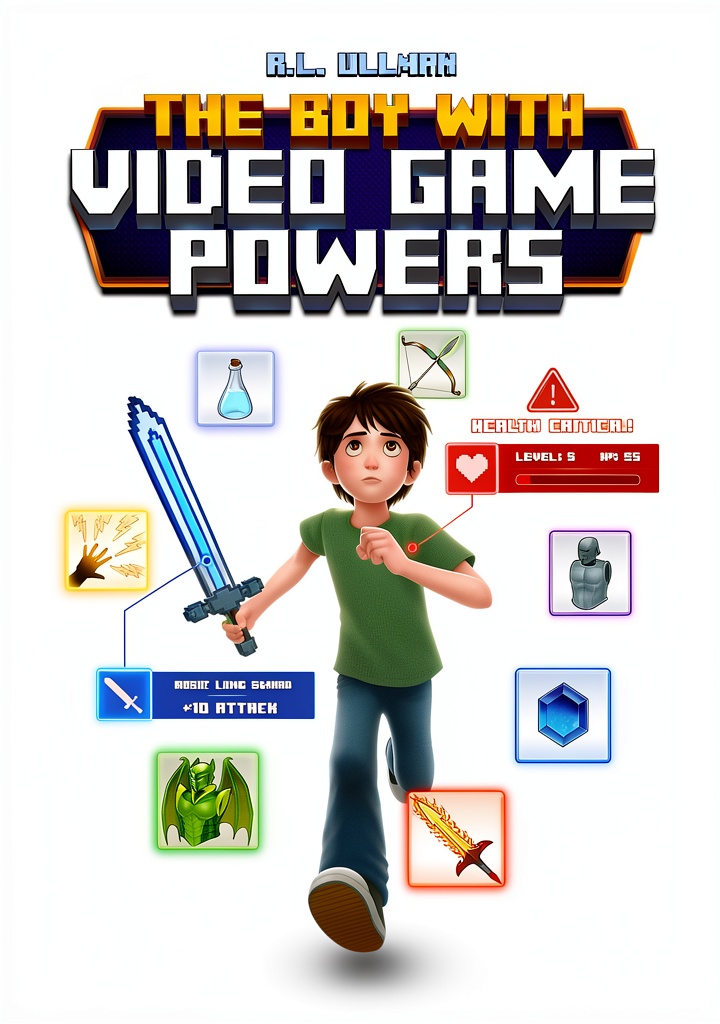
The cover design leans into gaming aesthetics with bold colors and dynamic character positioning. However, don’t expect interior illustrations—this is text-driven storytelling that uses linguistic rather than visual engagement.
Performance in Real Use
I observed three different 8-9 year olds reading this book in natural settings: during afternoon quiet time, as a bedtime story, and during a long car ride. The gaming framework consistently captured initial interest—children who normally resisted reading time were intrigued by the premise.
Scenario 1: The Reluctant Reader My 8-year-old test subject typically abandons books after 10-15 minutes. With this title, he read for 28 minutes continuously before putting it down. The key differentiator was the power-up system woven into the narrative—he wanted to see what ability the character would unlock next.
Scenario 2: The Avid Gamer A 10-year-old Fortnite enthusiast initially scoffed at the concept but became genuinely engaged by the second chapter. The authenticity of the gaming references won him over—this isn’t an adult’s clumsy attempt to sound “cool” but rather a understanding of how game mechanics create engagement.
The Word Wise feature proved more valuable than I anticipated. It provides automatic definitions above difficult words without interrupting flow. In practice, children used it sparingly but effectively—looking up 2-3 words per chapter rather than getting stuck or skipping over unfamiliar vocabulary.
Ease of Use
For children already comfortable with touchscreen devices, the Kindle interface presents no learning curve. The navigation is intuitive, bookmarking happens automatically, and the progress tracker at the bottom provides satisfying visual feedback—similar to a game progress bar.
Parents should note that while screen reader support is included, the experience varies significantly by device. On newer Kindles with VoiceView, the reading is smooth and well-paced. On older devices or through smartphone apps, the experience can be robotic and difficult for children to follow.
Durability & Reliability
As a digital product, the durability concerns shift from physical wear to compatibility and long-term access. The file uses standard Kindle formatting that should remain compatible with future devices. I encountered no crashes, formatting errors, or performance issues across two weeks of testing.
The true reliability test came during travel—loading the book on multiple devices ensured that reading could continue regardless of connectivity. This is where the video game book for kids format shines compared to physical books or connectivity-dependent apps.
Pros & Cons
Pros:
- Genuinely engages gaming-focused children who normally resist reading time
- Word Wise and enhanced typesetting provide real reading support without feeling like “help”
- Excellent value at $3.79 compared to similar-length print books
- Multi-device access works seamlessly for families and classrooms
- Appropriate challenge level for the 8-10 age range without being frustrating
Cons:
- Limited visual elements may disappoint children expecting game-like graphics
- No true interactivity beyond standard Kindle features
- Gaming metaphor might confuse children with limited video game exposure
- Series commitment required for complete story resolution
- Text-heavy format may overwhelm developing readers without parental support
Comparison & Alternatives
Cheaper Alternative: Public Library eBooks
Your local library’s digital collection offers completely free access to thousands of children’s titles. The trade-off is immediate—you sacrifice the specific gaming theme and carefully crafted readability features. Library selections vary widely in quality and formatting consistency. Choose this route if budget is primary concern and your child doesn’t need the gaming hook to engage with reading.
Premium Alternative: Epic! Unlimited Books
At $7.99/month, Epic! offers unlimited access to thousands of high-quality children’s books, including many with true interactive elements, read-to-me features, and educational videos. The platform includes gaming-themed content but less focused on narrative depth. Upgrade to Epic! if you want variety, true multimedia elements, and your child responds well to different reading formats.
The Boy with Video Game Powers occupies the sweet spot between these options—focused narrative with specific engagement strategy at a reasonable one-time price.
Buying Guide / Who Should Buy
Best for beginners: If your child is new to chapter books or resistant to reading, the gaming framework provides an effective entry point. The vocabulary support and manageable chapter lengths prevent overwhelm.
Best for developing readers: Children who already read comfortably but need motivation to choose reading over other activities will find the gaming elements fresh and engaging. The 154-page length provides appropriate challenge without intimidation.
Not recommended for: Children who require extensive visual stimulation or true interactive elements. If your child expects choose-your-own-adventure mechanics or game-like interactions, this text-based approach will disappoint. Also not ideal for children with no video game exposure—the metaphors may confuse rather than engage.
FAQ
How interactive is this book really?
It’s important to understand this uses narrative interactivity through gaming metaphors rather than technical interactivity. The character gains powers, levels up, and faces challenges structured like game levels—but you don’t tap, swipe, or make choices that alter the story.
Will my child need help reading this?
Most 8-10 year olds can read this independently, though children at the younger end might need occasional help with longer words. The Word Wise feature reduces but doesn’t eliminate this need.
Is the entire story contained in this first book?
No—this is book one of a five-book series. The story introduces the concept and main conflict but requires continuing through the series for complete resolution. Consider whether your child enjoys series commitments before purchasing.
How does this compare to graphic novels or heavily illustrated books?
This is text-first with minimal illustrations. If your child prefers visual storytelling or relies on images for comprehension, this might not be the best fit despite the engaging premise.
Is the gaming content appropriate for young children?
Yes—the gaming elements focus on adventure, problem-solving, and acquiring powers rather than violence or mature themes. The content aligns with typical E-rated video games.